
What Is Epoxy Flooring and Why Does It Matter?
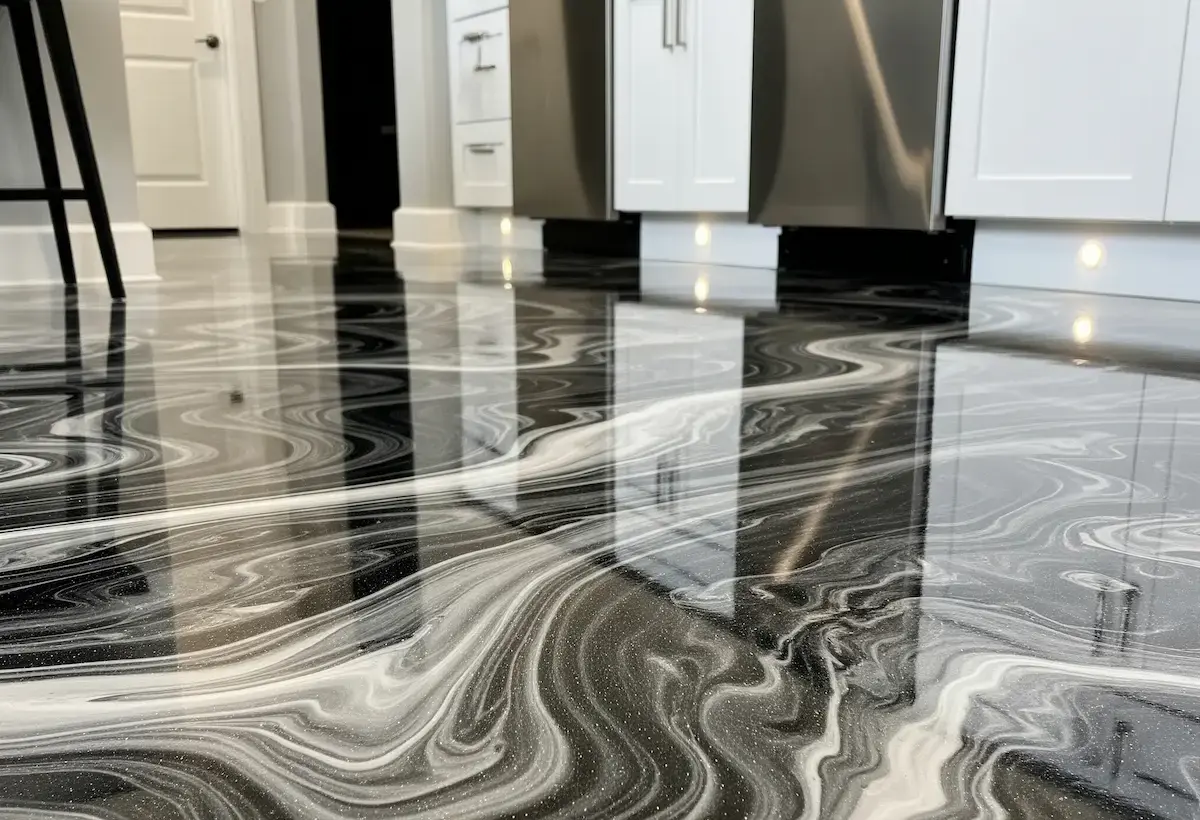
Epoxy flooring isn’t just a surface—it’s a seamless solution that transforms concrete into a resilient, polished foundation. By chemically bonding epoxy resin with a hardener, the mixture cures into a high-performance floor that can endure everything from heavy foot traffic to chemical spills.
Whether you’re upgrading a garage, basement, or even your kitchen, epoxy flooring delivers a fusion of strength, style, and simplicity. Its smooth, reflective finish enhances lighting, resists stains, and prevents moisture intrusion—qualities especially useful in Michigan’s climate.
At Epoxy Flooring Detroit, we install epoxy floors throughout Shelby Township, Auburn Hills, Bloomfield Hills, Northville, and Monroe, offering tailored solutions for both residential and commercial spaces.
How Much Does Epoxy Flooring Cost?
The average cost of epoxy flooring ranges from $3 to $12 per square foot. But price depends on factors like surface prep, installation method, epoxy type, location, and square footage. Here’s a quick breakdown:
| Location | Price Range (per sq. ft.) | Notes |
| Garage | $3 – $7 | Basic flake or solid epoxy; some surface prep |
| Basement | $4 – $8 | May require a moisture barrier or sealing |
| Kitchen | $5 – $12 | Premium metallic or decorative finishes |
| Commercial/Industrial | $6 – $12+ | Thicker coatings, slip resistance, durability |
Pro Tip: Square footage discounts often apply for larger spaces.
Epoxy Flooring Detroit provides free quotes and site inspections to determine your exact cost.
Factors That Affect Epoxy Flooring Prices
-
Surface Preparation: Grinding, crack repair, and cleaning add $1–$5 per sq. ft. but are crucial for bonding.
-
Type of Epoxy Coating: Solid color systems are affordable. Metallic, flake, or quartz blends increase cost.
-
Floor Size: Larger jobs cost more in total but less per square foot.
-
Thickness: Residential coatings may be 1–3mm thick, while industrial coatings can reach 5–8mm.
-
Location: Installation in areas like Northville or Bloomfield Hills may cost more due to layout or finish preferences.
-
Add-ons: Slip resistance, UV protection, antibacterial properties, and decorative finishes increase final cost.
Epoxy Kitchen Floors: Worth the Price?
Epoxy kitchen floors are trending for their modern look and cleanability. Spills wipe up effortlessly. You won’t deal with grout lines, and the surface is food-safe when sealed properly. A metallic or marble-look epoxy floor adds visual luxury without breaking the bank.
In upscale kitchens in Shelby Township or Auburn Hills, homeowners are increasingly choosing epoxy for its resilience against grease, wear, and water.
Installation Cost: $5–$12/sq. ft., depending on design and prep work.
Garage Flooring Epoxy: A Smart Investment
If your garage doubles as a workshop, storage area, or man cave, epoxy flooring protects it from oil stains, tire marks, and abrasions. Epoxy also boosts resale value with its glossy, showroom-grade appearance.
Installation Cost: $3–$7/sq. ft. for standard systems. Add $1–2 for high-gloss or decorative flake upgrades.
Epoxy Garage Flooring in places like Monroe or Northville is popular because it handles Michigan’s road salt and winter slush with ease.
Epoxy Basement Floor Cost: What to Expect
Basements come with their own challenges, including moisture and concrete imperfections. Epoxy is ideal because it’s water-resistant and mold-repellent. When combined with a moisture vapor barrier, it can protect your basement floor for decades.
Installation Cost: $4–8/sq. ft. Additional charges may apply for sealing, dehumidifying, or extensive crack repair.
Disadvantages of Epoxy Flooring: What to Consider
While epoxy has many benefits, it’s not perfect. Here are a few potential downsides:
-
Slippery When Wet: Can be mitigated with anti-slip additives
-
Installation Time: Takes 3–7 days, including curing
-
Surface Prep Is Crucial: Poor prep leads to peeling or bubbling
-
Hard Surface: Comfortable to walk on, but not as soft as tile or vinyl
-
Permanent: Removal is difficult and requires heavy-duty grinding
But here’s the truth: When professionally installed with the right prep and coating, most of these issues are eliminated.
Local Expertise, Transparent Pricing
At Epoxy Flooring Detroit, our pricing is 100% transparent. We don’t just quote a number—we explain exactly what you’re getting. Our team knows how Michigan’s climate impacts flooring, and we adapt accordingly.
We service homes and businesses across Shelby Township, Auburn Hills, Bloomfield Hills, Northville, and Monroe. Each city has its own needs—from the luxury of Bloomfield kitchens to the functionality of Northville basements—and we tailor every project.
FAQ: Epoxy Flooring Cost & Options
Q1: What is epoxy flooring?
It’s a durable surface created by mixing epoxy resin and hardener. Once cured, it forms a seamless, glossy, and chemical-resistant coating perfect for residential and industrial floors. It also improves light reflectivity and is available in custom colors and textures. Epoxy is known for its long-lasting appeal and minimal maintenance.
Q2: How much does epoxy flooring cost?
Most homeowners pay between $3 and $12 per sq. ft. Cost varies based on prep, design, location, and coating type. Kitchens and basements tend to cost more due to moisture control needs. Larger areas often qualify for bulk pricing. Additional coatings or finishes will increase the final estimate.
Q3: Is epoxy good for garage floors?
Absolutely. Epoxy protects against tire damage, fluids, and road salt. It also improves lighting and is easy to clean. It’s a cost-effective way to upgrade your garage. Many garage floors last over a decade with proper care. Decorative flakes and slip-resistant finishes can be added for safety and style.
Q4: What are the main disadvantages of epoxy floors?
Slippery surfaces (if untreated), curing time, and the need for proper prep. These are easily managed by professional installers. DIY installations may fail without the right equipment. Some homeowners also find the surface too rigid for long-term use.
Q5: Can epoxy flooring be used in kitchens or basements?
Yes, it’s ideal for both. In kitchens, it resists stains and heat. In basements, it repels moisture and prevents mildew. Both environments benefit from their seamless finish. It also enhances indoor air quality by preventing dust accumulation. You can even install radiant heating underneath epoxy floors.
Final Thoughts
Epoxy flooring costs vary—but the value is clear. Whether it’s a sleek kitchen upgrade or a rugged garage makeover, epoxy delivers durability, beauty, and cost-efficiency. It’s not just an aesthetic upgrade, but a long-term investment in your property’s function and value.
These floors withstand high traffic, temperature shifts, and harsh chemicals without losing their appeal. They’re ideal for anyone who values cleanliness, resilience, and low maintenance—all in one solution.
By working with a trusted local expert like Epoxy Flooring Detroit, you ensure a long-lasting, custom installation tailored to Michigan living. We proudly serve clients in Shelby Township, Auburn Hills, Bloomfield Hills, Northville, and Monroe.
Upgrade Your Floors Instantly – Get a Free Epoxy Quote Today!